

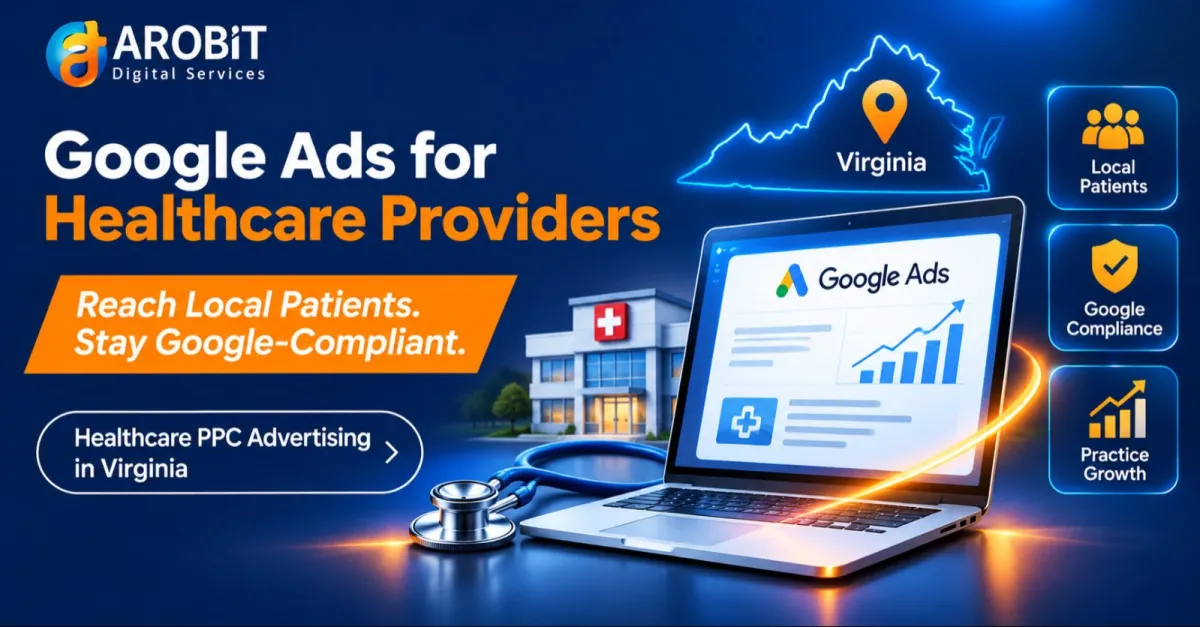
Google's healthcare ad policy names the services that need certification, such as telemedicine and addiction treatment. A general practice or dental office is not among the named categories, although every provider should check the policy against its own services. A different rule reaches far more providers: how Google handles health information in targeting.
This guide explains how Google Ads for healthcare providers in Virginia works within both rules. It covers what patients do before they call, how to target local searches, and what to check before you install tracking.
It is general information, not legal advice. Google updates its policies, so confirm each rule on the live policy page before you launch.
What Patients Do Before They Contact a Practice
Two recent patient surveys describe the research that happens before a call. Both were run by vendors and rely on self-reported answers, so treat the figures as directional.
LocalImpact's 2026 survey of 1,068 US consumers found that 73% had decided not to contact a provider after researching them online.— LocalImpact, How Consumers Choose Healthcare Providers, 2026
In rater8's 2026 patient survey, 7% named sponsored ads as the section of Google results they trust most for care.— rater8, 2026 Patient Choice Report
| What the data says about patients and Google | Figure |
|---|---|
| Patients who decided not to contact a provider after researching them online | 73% |
| Patients who name Google Search as their top way to discover providers | 25% |
| Patients who say online reviews are very important to their choice | 40% |
| Patients who first contact a provider by phone | 54% |
| Patients who trust the local map pack most among Google results for care | 13% |
| Patients who trust sponsored ads most among Google results for care | 7% |
Source: LocalImpact, How Consumers Choose Healthcare Providers, 2026, n = 1,068 and rater8, 2026 Patient Choice Report.
Two points follow from the data. Ads are one part of a patient's research, and few patients trust them most. Reviews and a credible website decide whether a click becomes a call. Most first contacts happen by phone, so call tracking belongs in every campaign.
What the Google Ads Healthcare Policy Covers
Google's healthcare and medicines policy lists specific service types that face limits or certification requirements in the United States. The table shows the ones most relevant to Virginia providers.
| Service type | What Google requires in the US |
|---|---|
| Telemedicine providers | Allowed with limitations, with certification typically through LegitScript. |
| Addiction treatment services | LegitScript certification as an addiction services provider, and some providers are ineligible. |
| Health and medical insurance | G2RS certification for advertisers other than government agencies. |
| Online pharmacies | Accreditation through LegitScript, NABP, or the .Pharmacy domain program. |
| Prescription drug terms | Restricted in ads, landing pages, and keywords, depending on location. |
Source: Google Ads policy, Healthcare and medicines.
An in-person practice, such as a clinic or dental office, is not one of these named categories. That does not make every ad automatically eligible. Google can still limit ads that touch restricted terms or products.
Listing the insurers you accept is also different from advertising insurance products. Confirm the line in the policy before you publish either.
- Read the policy section for each service you plan to advertise.
- Check the certification requirements for telemedicine, addiction treatment, and insurance.
- Keep prescription drug terms out of ads and landing pages unless the policy allows them.
- Recheck the policy each quarter, because Google updates it.
Health Information and Targeting: The Rule That Reaches More Providers
Google treats health as a sensitive interest category. Its policy on health in personalized advertising includes physical and mental health conditions, such as diseases, sexual health, and chronic conditions.
When you promote in that category, advertiser-curated audiences are not allowed. Customer Match, your data segments, audience expansion, and lookalike segments are not supported. Predefined Google audiences, in-market segments, and location targeting are supported.
That is likely to affect any plan built on retargeting past visitors, especially for condition-specific services. Confirm what your account allows before you promise a retargeting strategy. Plan around search intent and location instead.
Setting Up Google Ads for Healthcare Providers in Virginia
Healthcare PPC in Virginia works best when each campaign matches one service and one service area. Google Ads for medical practices rewards that focus, because a patient searching for a specific service wants a specific answer.
Build Campaigns Around Local Search Intent
Start with the searches patients use when they are ready to book. Group them by service, not by your internal department names.
- Service and location terms, such as family dentist in Richmond or urgent care in Fairfax.
- Specialty terms, such as pediatric dermatology or physical therapy.
- Near-me terms, which patients use heavily when they look for a new provider.
- Negative keywords for jobs, courses, and unrelated queries.
Review the search terms report each week and add negatives as you find them. Our Google Ads management follows the same weekly routine.
Target the Regions You Actually Serve
Virginia patients do not travel the same distances in every region. A practice in Northern Virginia, Richmond, Hampton Roads, or Roanoke serves a different catchment area. Location targeting is supported even in sensitive categories, so use it to match your real service area.
Match your ad location to your Business Profile and your website. Consistent details help patients trust the click.
Send Clicks to Pages That Answer the Search
A patient who clicks an ad lands on a page you control. That page should confirm the service, the location, and the next step within seconds.
- Name the service and the location in the headline.
- Show the phone number at the top and make it tap to call.
- List your hours, address, and the insurers you accept.
- Add recent patient reviews and clear provider credentials.
- Keep the booking form short.
Track Calls and Booked Appointments
Because most first contacts are phone calls, a form-fill count misses much of the result. Track calls from ads, booked appointments, and form submissions in one view. Judge campaigns by booked appointments, not clicks.
Check Privacy Before You Install Tracking
Tracking tools on a healthcare site raise privacy questions that go beyond the Google Ads healthcare policy. The U.S. Department of Health and Human Services issued guidance on online tracking technologies for HIPAA-regulated organizations.
A federal court later vacated part of that guidance for public-facing pages. Legal reporting from 2024 says the ruling does not change the policy for pages where users must log in. It also says HHS dropped its appeal.
Rules and court decisions change, so ask your privacy officer or counsel to confirm the current position. Keep tracking tags off patient portals and booking steps behind a login unless counsel approves them. Do not pass patient health details into advertising platforms.
Measure Patients, Not Clicks
Measurement is where Google Ads for healthcare providers in Virginia proves its value. Search ads also work best next to strong local search. Our guide to SEO for healthcare providers in Virginia covers the organic side of the same patient journey.
- Booked appointments from ads, by service and by region.
- Calls from ads, including call length and whether the call became an appointment.
- Booked appointments per campaign, compared across services.
- New patients versus returning patients.
- Review volume and rating, since reviews shape the click-to-call decision.
Avoid the common errors in our guide to PPC mistakes and how to fix them. See how our Google Ads management fits into our approach to digital marketing for healthcare.
Frequently Asked Questions
What does Google Ads for healthcare providers in Virginia involve?
Google Ads for healthcare providers in Virginia covers service-based campaigns, local targeting, landing pages, and call and appointment tracking. All of it must fit Google's healthcare ad policy and your privacy obligations. Reporting should focus on booked appointments rather than clicks.
Do healthcare providers need certification to run Google Ads?
Not every provider does. Google requires certification for specific services, such as telemedicine, addiction treatment, and health insurance. Check the Google Ads healthcare policy against each service you advertise, and confirm it again when the policy changes.
Can we retarget website visitors with Google Ads?
It depends on what you promote. Google does not support advertiser-curated audiences, such as Customer Match and your data segments, in sensitive health categories. Confirm what your account allows, and ask counsel before you use visitor data.
Conclusion: Reach Patients Without Guesswork
Google Ads for healthcare providers in Virginia works when the campaign matches what the policy allows and what patients actually do. Know which rules apply to your services, target the regions you serve, and send clicks to pages that earn a call. Then measure booked appointments, not clicks.
Arobit Digital is a digital marketing agency serving Virginia. Its healthcare work covers appointment-intent search campaigns, local SEO, and tracking for calls and bookings. The team is backed by Arobit Business Solutions and its 13+ years of technology and consulting experience.
Schedule an SEO consultation to identify opportunities for improving search visibility and lead generation.