

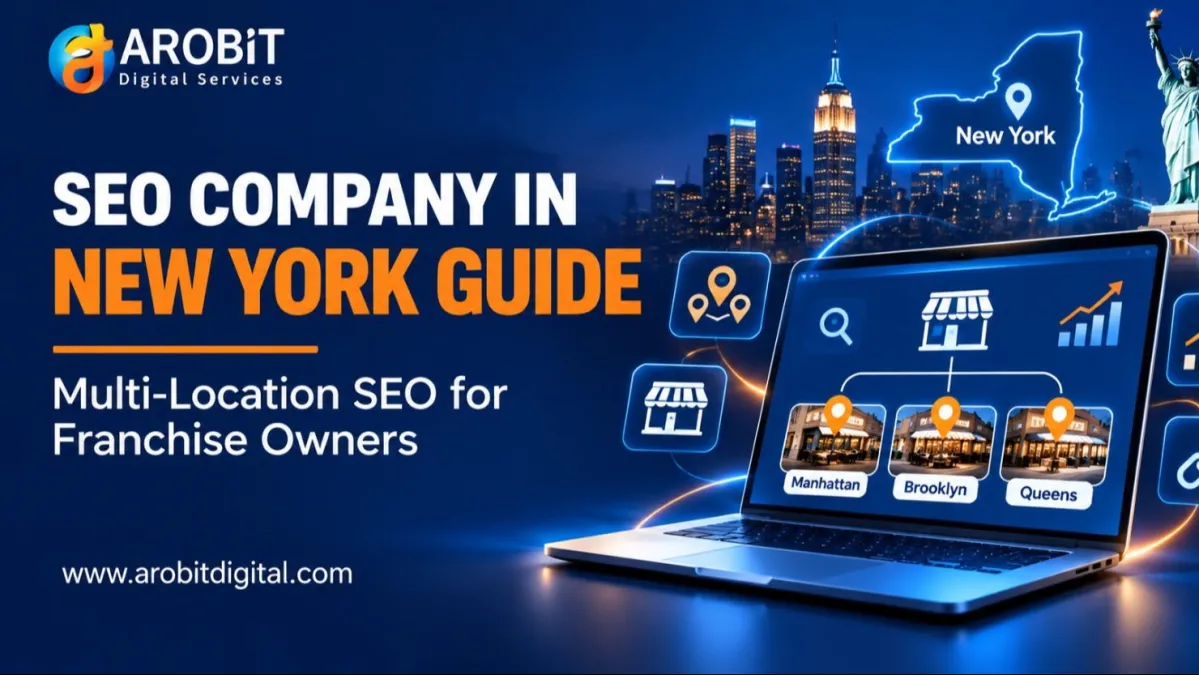
Franchise and multi-location brands face a different SEO problem than a single storefront does. Each location needs its own visibility in local search. The brand also needs one consistent strategy holding all of it together.
That balance is harder to get right than most franchise owners expect in today's crowded New York market. It is exactly where an SEO company in New York built for multi-location clients earns its fee. A firm set up to handle a single website usually is not.
"In 2024, it was estimated that there would be some 831,000 franchise establishments in the United States." Statista, Franchising in the US, 2024
That scale means most franchise systems are competing against other multi-location brands for the same local search real estate, location by location. A strategy built for one storefront does not scale cleanly to ten or fifty, and New York adds its own layer of difficulty. A franchise with locations spread across Manhattan, Brooklyn, Queens, and the surrounding suburbs is effectively running several separate local markets under one brand name.
Why Multi-Location SEO Works Differently From Single-Location SEO
A single-location business optimizes one website, one Google Business Profile, and one set of local citations. A franchise with multiple New York locations has to manage all of that separately for every address. At the same time, it has to keep brand messaging and quality consistent across every page.
New York adds its own competitive pressure on top of that. A franchise opening its third or fourth location in the metro area is not just competing with national chains anymore. It is competing with independent local businesses that have spent years building neighborhood reputation and review history in that exact zip code. That history makes generic, templated location pages even less effective here than in a smaller market.
Three problems show up almost every time. Location pages built from the same template can look duplicate to search engines if they are not written with real local detail. Reviews and local citations get scattered across inconsistent business names and addresses as locations open, close, or change managers.
"94 percent of respondents stated that positive reviews made them more likely to use a business, while 92 percent said negative reviews made them less likely to patronize a local business." Statista, Online Review and Customer Opinion Survey, 2020
That gap between a positive and negative review matters even more across a franchise system. One location with a run of bad reviews can color how prospective customers see the entire brand, not just that one address.
The third problem is more subtle. Two nearby locations can end up ranking against each other in local search instead of against the intended competitor. A franchise with a Midtown location and a Downtown Brooklyn location is one example. The two pages can end up competing for the same searches if they target identical keywords instead of being mapped to their own neighborhoods.
None of these problems are visible from a single dashboard unless someone is specifically watching for them across every location at once. That is usually the gap an in-house marketing team, stretched across many other responsibilities, does not have time to close. A franchise owner juggling operations, staffing, and vendor relationships rarely has the bandwidth to audit twenty separate location pages by hand every quarter.
What a Franchise SEO New York Strategy Should Actually Cover
A proper franchise SEO New York approach needs to work at two levels at the same time: the brand level and the individual location level. Skipping either one usually shows up as flat rankings within a few months, even when the overall marketing budget looks healthy.
- A dedicated, uniquely written page for every location, not a templated page with the address swapped
- Consistent name, address, and phone number data across every directory and citation source
- Google Business Profile management for every location, including posts, photos, and Q&A, not just the listing itself
- A structured review generation process that works the same way at every location
- Centralized reporting that shows performance by location, not just in aggregate
- Clear content governance so individual franchisees cannot publish duplicate or off-brand pages on their own
That last point matters more than it looks. Franchise systems that let individual location owners manage their own web presence often end up with inconsistent quality. Duplicate content and conflicting messaging creep in across what should be one unified brand.
Centralized governance does not mean removing local flexibility. It means every location page is reviewed against the same quality bar before it goes live, no matter which franchisee is running that specific address.
The table below breaks this down by franchise size. A five-location brand and a fifty-location brand are not solving the same problem, even inside the same industry.
| Franchise Stage | Primary Challenge | Where to Focus First | Typical Timeline |
|---|---|---|---|
| 2 to 5 locations | Inconsistent listings and thin location pages | Citation cleanup and unique page content | 2 to 4 months |
| 6 to 20 locations | Review management at scale | Centralized review and reporting process | 4 to 6 months |
| 20+ locations | Cannibalization between nearby locations | Location-level keyword mapping and internal linking | 6 to 12 months |
What to Look for in an SEO Company in New York for Multi-Location Brands
Most agencies can optimize a single website well. Far fewer can run the same process cleanly across fifteen or thirty locations without losing consistency between them. A digital marketing company NY franchise owners can trust with this scope is not necessarily the one with the flashiest case study. It is the one with a repeatable process for every location.
Before hiring any SEO company in New York, a franchise owner should check for a few specific things. A generic pitch alone is not enough to go on.
- Direct experience with multi-location or franchise clients, not just single-location local SEO work
- A reporting dashboard that breaks out performance by individual location, not only in one combined total
- A documented process for keeping NAP data consistent as locations open, close, or move
- A content process that avoids duplicate or near-duplicate location pages across the brand
- Case studies or references from brands with a similar number of locations
That last point is worth pressing on directly in a sales conversation. An agency that has only ever managed two or three locations for a client will likely struggle with the coordination a twenty-location brand actually needs. This can be true even when their single-location SEO work is strong, since managing one website and managing thirty of them require genuinely different processes, not just more hours.
A regional fitness franchise with nine locations across the New York metro area recently consolidated its SEO work. It had been split across three different freelancers, one per cluster of locations, into one coordinated process instead.
Within four months, five of the nine locations moved into the local map pack for their core service terms. Most of that gain came from consistency, not new tactics. Listings and location pages were finally aligned instead of being handled separately by each franchisee with their own approach.
Google's own guidance on managing multiple Google Business Profile locations confirms that consistent, verified location data is a baseline requirement. No ranking strategy works well on top of inconsistent listings. Franchise owners evaluating their legal and operational setup may also find the U.S. Small Business Administration's guidance on franchising useful context alongside their marketing plan.
Common Mistakes Franchise Owners Make When Choosing a Digital Marketing Company NY
Even franchise owners who know their own business well can get this part wrong. A few mistakes come up often enough to name directly, and each one is avoidable with the right questions upfront.
- Treating every location identically instead of letting each one target its own neighborhood and search terms
- Hiring a generalist digital marketing company NY firm with no track record managing more than one or two locations at once
- Judging an agency mainly on the proposal instead of asking how they would report on individual locations
- Letting franchisees build their own location pages without any shared review process
- Chasing overall ranking improvements without tracking which specific locations are generating leads
That last mistake is especially common. A brand can look like it is growing in aggregate while two or three underperforming locations quietly drag down the average. Strong results elsewhere in the system can hide the problem for months.
The fix is not complicated, but it does take discipline. Location-level reporting needs to be the default view, not something requested only after a franchisee raises a complaint. Once that visibility exists, underperforming locations usually turn out to have a specific, fixable cause. It might be a missing citation, a stale Google Business Profile, or a location page that was never written with real local detail in the first place.
A seo agency ny franchise owners can actually rely on will usually ask about the number of locations first. How those locations are managed shapes the scope of work before any proposal gets written. An agency that skips straight to tactics without asking those questions is a warning sign. It is usually planning to run every location the same way, which is the exact problem this guide is meant to help avoid.
Final Thoughts
A franchise owner researching an SEO company in New York is really solving two problems at once. One is visibility for the brand as a whole. The other is visibility for each individual location, which does not automatically follow just because the brand name is strong. A well-known brand can still have a specific location that nobody can find in local search, and that gap costs real customers at that one address.
The agencies that handle this well treat every location as its own local search campaign inside one coordinated strategy. It is not a copy-paste job repeated across addresses.
Arobit Digital approaches multi-location SEO through Arobit Business Solutions. That brings 13+ years of technology and business consulting experience into how location-level reporting and attribution get structured. That background helps franchise owners see which specific locations are converting, instead of only seeing how the brand performs as a whole.
Schedule an SEO consultation to identify opportunities for improving search visibility and lead generation.
Frequently Asked Questions
Q: How is SEO for a franchise different from SEO for a single-location business?
A franchise has to manage local search performance separately for every address while keeping brand messaging and quality consistent across all of them. A single-location business only has to manage one website, one listing, and one local market, which is a much simpler coordination problem. The complexity in franchise SEO comes from multiplying that work across every address without letting quality slip anywhere.
Q: What should I look for in an SEO company in New York for a multi-location brand?
Look for direct experience with multi-location clients and a reporting dashboard broken out by location. Also ask for a documented process for keeping business listings consistent as locations change. A real franchise SEO New York strategy should also include clear content governance so individual locations cannot publish duplicate pages on their own. Case studies from brands with a similar number of locations are a useful filter.
Q: How long does multi-location SEO take to show results in New York?
Smaller franchise systems with a handful of locations typically see initial movement within two to four months, mostly from listing cleanup and better location pages. Larger systems with twenty or more locations usually need six to twelve months. Cannibalization between nearby locations simply takes longer to resolve than a basic listing fix.